



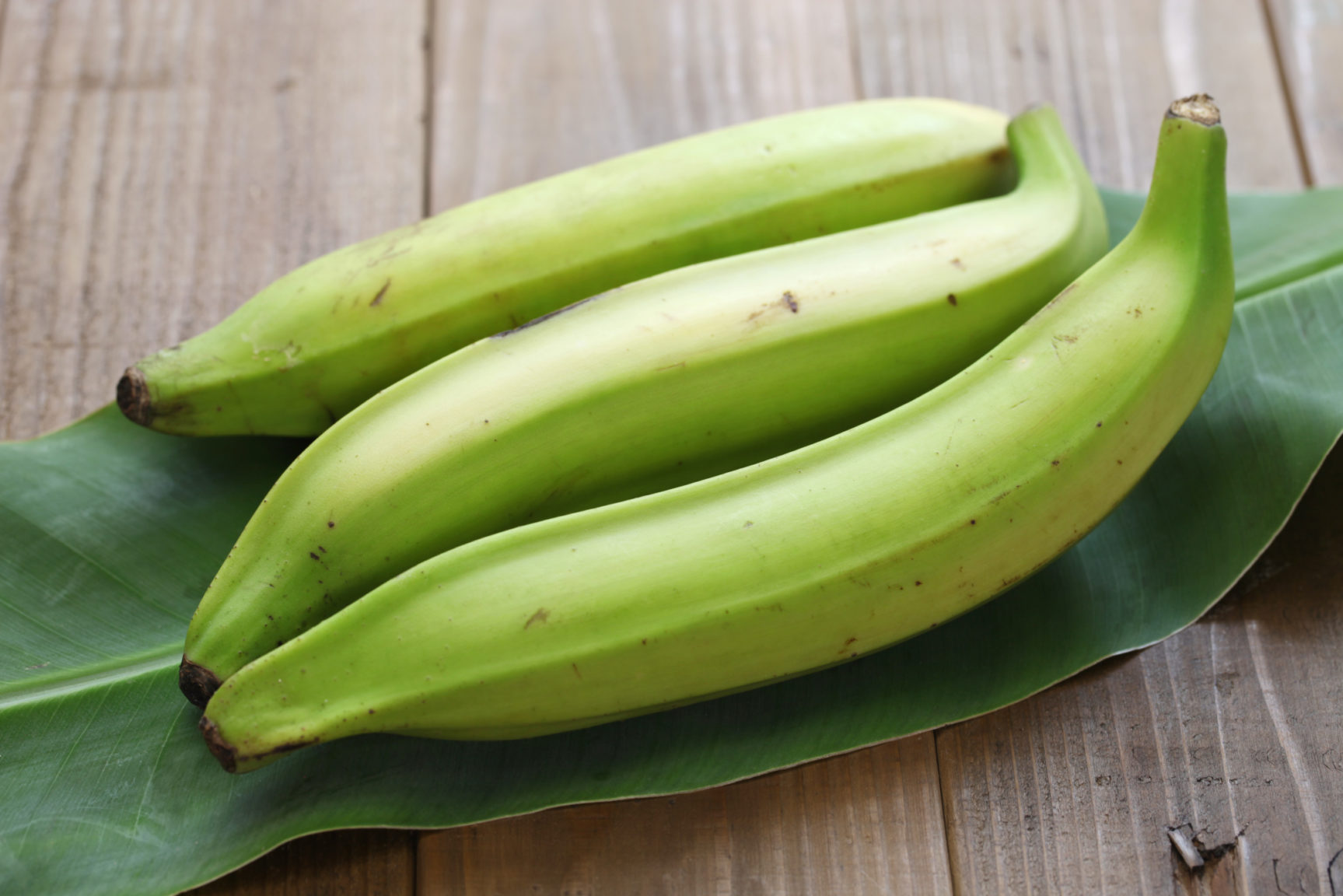
plantain (banana)
Are you a farmer who is struggling with productivity, profitability and sustainability?
Growing a plantain can be a successful wand that can reward your years of fruitless labor.
Growing plantain is one of the simplest and most useful works in Nigeria.
Or are you a new enthusiast who is not sure which cult is cultivated with minimal capital; who are interested, perhaps, in activities with a low risk of farming and who wants to receive a guaranteed income? You may have to try planting plantain.
The crop grows best in a tropical climate rich in moisture.
The flowers turn into a pile of plantain, which contains from five to 15 threads of fruit.
Plantains do not have a growing season and are therefore available all year round, especially on irrigated farmland. This makes them a reliable source of food.
Many farmers may have tried and failed, but given the necessary requirements, growing plantain can be very lucrative and easy to launch. This is also done in an integrated system.
The requirements for successful plantain plantation include improved varieties of planting material, called suckers; soil fertility; know-how in the field of planting; manure, and, most importantly, the use of water.
Like rice and sugar cane, plantain is a water-absorbing plant, and dehydration of the crop causes growth retardation, poor fertility and susceptibility to drought and malnutrition.
Agroecological factor and soil
If a farmer wants to make good profits from his investments, he should be ready to work on a large farm in forest ecologies, where showers are very high per year. It simply means that the environment should not be dry.
Crops can be planted during the rainy season, but planting in the middle of the rainy season is the best option, because in this way it will be possible to produce the plantain in a season with irrigation and sell at higher prices.
Some states are more favorable for the cultivation of plantains in Nigeria and include all states in the geopolitical zones of the South-East, South-South and South-West.
Some parts of Kvar, Kogi, Niger, Adamava, Nasarava, Taraba and Zamfar can also grow plantain.
Proper cleaning of the land is necessary to avoid infection with weeds.
Plants always need an extra nutrient if you want the best quality, and manure or ash from woodfires can help in achieving this goal.
To control weeds, you can decide to use herbicides or use manual labor, and this should be done every six to eight weeks at an early stage. Infection of weeds is reduced after five to six months due to shading.
It is important to use loamy soil, as it contains very good organic substances.
The compost head made of poultry, cow manure and pork extracts can be generously distributed on the plantation to enrich the land and get a bumper crop.
With regard to pest or disease control, there are various ways, including cultural practices, mechanical and physical control, biological control and chemical control. Crops should be protected from diseases, because they are very harmful to them.
Planting materials and population per hectare
It is expected that the plantain planter uproots the suckers from other plantain crops or buys and transplants to his farm.
After transplanting the sucker, he should water them daily until the rainy season comes.
Semeton Amosu, a researcher in soil health, pomology and GIS research, fruit and spice department, National Research Institute of Horticulture (NIHORT), Ibadan, during the briefing of The Guardian on advanced methods of plantain planting, said that the plantain population per hectare is 1 667 and per acre is 667, and the distance is 3 m X 2 m; 3m between the lines and 2m in the line.
He added that harvesting begins about 12 months after planting or transplanting, but it may be shorter, depending on the agronomic methods used during the growing period.
Water is also very important during the dry season, and there are improved varieties that have been bred for resistance to diseases and low sugar content.
The economy of plantain planting
From the above, at least 1,667 suckers will be planted per hectare of land.
The plantain rose in Lagos, who preferred anonymity, revealed to The Guardian that she bought six bunches of plantain in the amount of N7,000, depending on the size of the clot.
Assuming that a farmer can collect 1,500 bundles at the end of one year and can sell each on the N1000. The total amount of the sale will be N1.5 million.
A farmer can also sell dried plantains as planting materials to other farmers.
Each adult plant will produce at least three suckers, and if he can collect one suction cup from each and can sell for N100, the farmer will produce an additional 150,000 pounds sterling.
Harvesting cycles last for at least four to six years or more, depending on the system of land rejuvenation and management practices.
The initial invested capital, including land cleansing, planting labor and the cost of suckers, should not exceed 300,000 people if it has land before cultivation.
Other subsidiary agribusinesses
One of the auxiliary agro-enterprises involved in the cultivation of plantain is fish farming.
This is the ideal way to maximize resources when water released from fish ponds regularly irrigates the farm, especially in the dry season.
Thus, the cost of irrigation of the plantain plant is zero, because it becomes a side benefit for the farm.
Street farming, also known as forestry, is another agriculture that could be used to grow plantain and fish in an integrated smart farm.
Snails and plantains thrive in an environment with high humidity, and sewage from fish ponds will serve the purpose of creating irrigation for crops and providing moisture for the growth of snails.
From the IITA experiment, you can use the yarn of a mature plantain to create several suckers.
This is done by preparing a kindergarten, covered with sawdust and sand, as well as a sprig of plantain, buried in bed.
After three weeks of moistening, the seeds in the string begin to grow.
Several suckers could be collected and sold to other farmers. What an intelligent and integrated way of farming!
Marketing of plantains
Marketing of plantain is one of the simplest, because fruits can serve several purposes.
This means that many people, houses and restaurants buy a plantain for various uses.
With this fact it is quite natural to constantly have a very high level of demand for plantain.
For example, immature plantain can be processed and prepared in various ways. It is fried and eaten with peanuts.
Ripe fried, like chips (dodo), eaten with rice or beans.
Some people treat unripe plantain to powder after drying in the sun, used to make amalas among Yorubas.
Crispy chips are made from plantain and are sold even on the streets of Lagos.
Some people, after cleansing the unripe plantain, mix it with a little water and, when properly crushed, ignited and constantly stirred until it thickens.
This paste is taken with your favorite soups, and it is believed that it is medicinal, especially for diabetics.
Therefore, selling plantain – one of the simplest things.
!function(f,b,e,v,n,t,s){if(f.fbq)return;n=f.fbq=function(){n.callMethod?
n.callMethod.apply(n,arguments):n.queue.push(arguments)};if(!f._fbq)f._fbq=n;
n.push=n;n.loaded=!0;n.version=’2.0′;n.queue=[];t=b.createElement(e);t.async=!0;
t.src=v;s=b.getElementsByTagName(e)[0];s.parentNode.insertBefore(t,s)}(window,
document,’script’,’https://connect.facebook.net/en_US/fbevents.js’);
fbq(‘init’, ‘1797528920521807’);
fbq(‘track’, ‘PageView’);