


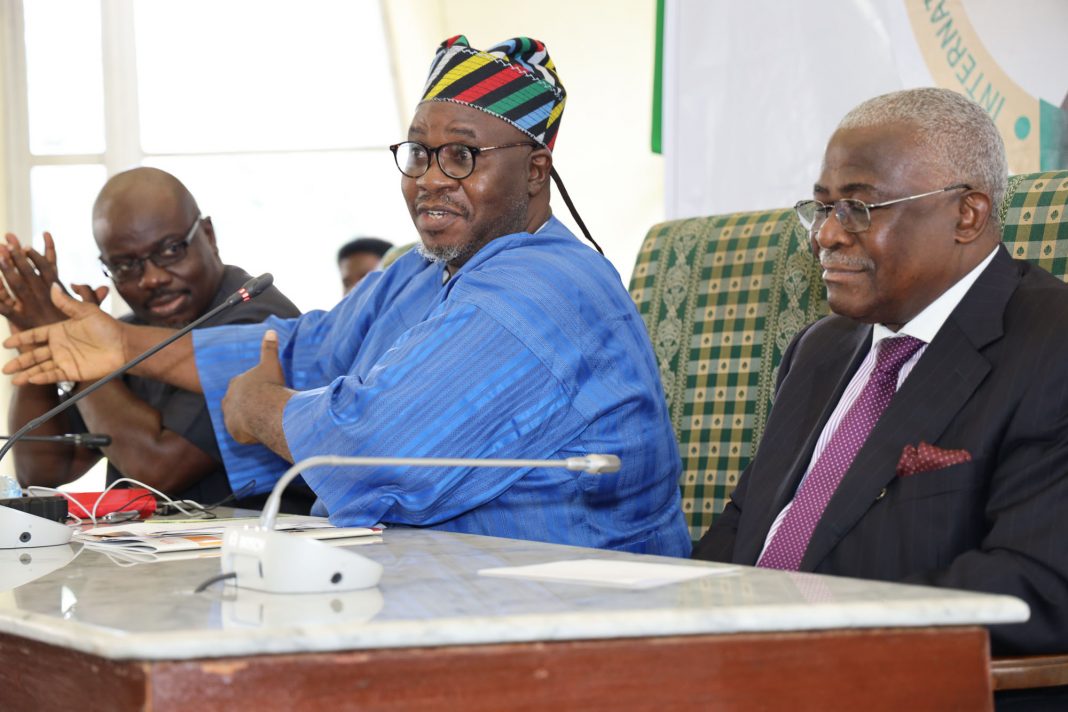

At a recent stakeholders’ gathering aimed at seeking solutions and finding ways to innovate the agricultural sector, Dr Kanayo Nwanze, former president, International Fund for Agricultural Development (IFAD), said that Nigeria transformation cannot be made possible through foreign investment and partnership but, rather, it is what the citizens must do by themselves.

Dr Nwanze was the Keynote Speaker on Thursday at the ICERIA 2019 International Conference and Expo on Research and Innovations in Agriculture held at the Nigerian Institute of International Affairs in Lagos on the theme, “Harnessing Sustainable Agricultural Innovations for Eonomic Development”
He put forward that for any Nation to succeed, the government, public and private sectors have to partner and synergise efforts in business, research and policy making.
He said, “Development is not what somebody introduces into your country, it is not something that somebody does for you, development is something that you do for yourself. We should not expect Nigeria transformation to be brought out from foreign investment and partnership, we must do it ourselves.”
According to Dr Nwanze, the success of any Nation depends on the partnership between the government, public and private sectors. He categorised the private sector as the business community, the public sector as responsible for providing research information in all fields and the government as the policy maker.
READ MORE: Yobe cattle market reopens two weeks after Boko Haram attack
Stating that agriculture still remain the largest employer of labour, he said that the youth can be encouraged to embrace agriculture if the government makes it attractive as an economic activity and money making business.
Hinting that in the 17th and 18th centuries, England and Europe ruled the world, Japan in the 19th century, China, India and Brazil in the 20th century, Dr Nwanze said all these countries went from being an agrarian societies to industrialised countries.
He asked, “How do you explain that China in the ’60s and ’70s when one million people died out of famine, Nigeria and many African countries where next spot of food products. And within a space of 30 years was receiving technology from China, what happened to us?”
Dr Nwanze who noted that the travails on the agricultural sector came when oil was discovered, said, “Government needs to provide the enabling environment and put forward the right policies and institutions.”
While also suggesting that research has a role to play in addressing the worrisome state of the agricultural sector, he said, the social scientists have to bear the responsibilities of advising the government to develop sound policies.
“It is only when we can prove to government that research, science and technology matters by taking the products of science and technology and making sure it did not only reach the farmers but change lives” Dr Nwanze said and by so doing science would have impact on the business community.

He further suggested that the country has to focus on innovations that matter to it, but raised fear that as long as agriculture remain neglected and the youths uninterested, the rural population will continue to migrate to the urban areas, thereby increasing reduction in agriculture participation, resulting in the youths ending up living in urban slums and becoming highly rhetoric to extremism and drugs, while some consider migration only to die in the Mediterranean sea and Sahara desert.
READ MORE: Cassava: Nigeria can save N1.2trn from ethanol, starch, sweetener imports — Association
He warns that, “If the country did not begins to think action on these problems, our youthful and energetic population will become a sore point in our development.”
Other suggestions raised by participants at the event, if Nigeria must innovate its agriculture sector included: creating market for agric products; rebuilding some of the ancient agric farms; thinking and having long term approach towards farming; mitigating post harvest losses, constructing and rehabilitating road networks and, off course, providing adequate finance through decentralisation of the sector and building of exclusive bank for it.