



The professor of agricultural economics, Dr. Jude Nwaru, recommended that efforts be made to use the potential of small-scale farming to reduce poverty in Nigeria.
He also recommended reducing the existing shortcomings in the efficiency and productivity of farms, saying that this would allow farmers to increase their incomes, income and profitability, which ultimately lead to poverty reduction and welfare. Nwaru made these recommendations by giving the 37th inaugural lecture, Michael Okpar, Umudike University of Agriculture (MOUAU), Abia, entitled "Little handsome: give us this day our daily bread".
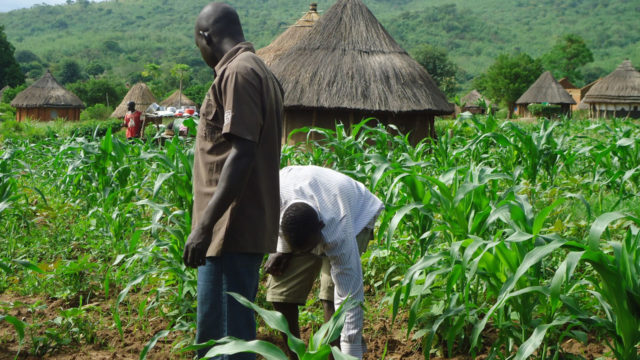
He described small-scale farming as done on less than 10 hectares of land and practiced by families using only or predominantly family labor and receiving from their farm a large but variable share of their income in kind or in cash.
According to Nwawa, small-scale farming systems are becoming increasingly important for global chains of creating value for agricultural products. " In Nigeria, food production is in the hands of small farmers who practice mixed farming, and grow from one to two hectares of agricultural land. More than 80% of farmers who also produce up to 98% of the food consumed in the country, with the exception of wheat, are smallholder farmers. "
According to him, efforts to use the potential of small-scale farming systems should include the creation of effective and accountable institutions that will apply a politically reasonable approach to economic development, using extensive opportunities in local agribusiness and stimulating investment in agriculture. "
He said that the reduction of existing shortcomings in the productivity and productivity of the farm requires serious attention and requires commitment and cooperation from the government, scientists, researchers, development specialists, farmers and other stakeholders.
His other recommendations included the creation of an enabling and low-income macroeconomic framework; political will that would ensure that good agricultural policies are translated into good practice; and policies that will create an enabling environment for competitive entry and output markets, which, he said, have become urgent.
After determining who is the farmer in the Nigerian context, he stated that "the scattered status of a farmer in Nigeria allows virtually everyone to be a farmer and no one can be a farmer," noting that this scenario creates problems during the policy of program development and implementation.