



[ad_1]
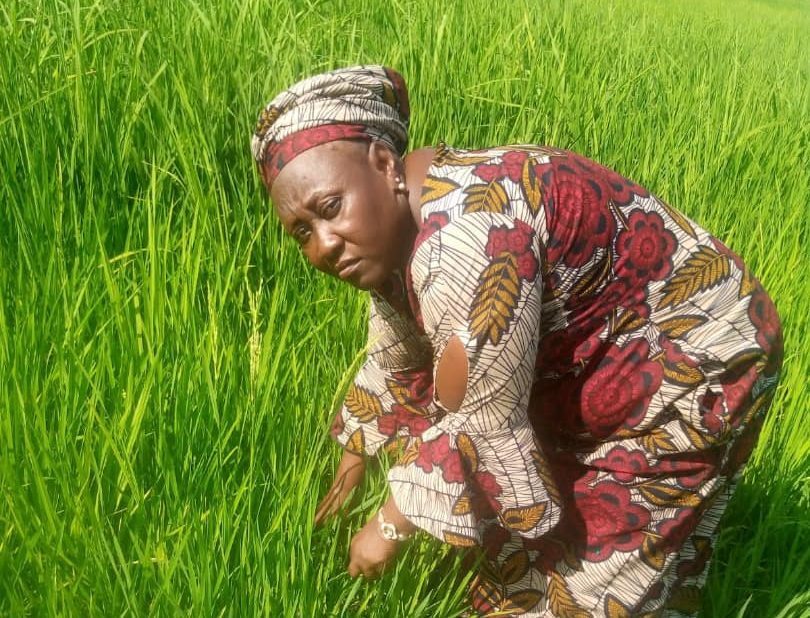
Safia Yahaya says the major challenge women farmers face is insecurity.
Safia Yahaya, 48, a mother of two who cultivates three crops in Kogi State, in the seventh episode of our new series share her experience with PREMIUM TIMES.
PT: Which crops do you cultivate?
Mrs Yahaya: I cultivate rice, cassava, and cashew.
PT: When did you start farming as a business?
Mrs Yahaya: I started farming about 20 years back.
PT: Land is often a major problem for women farmers. How have you overcome this in the last 20 years?
Mrs Yahaya: I started farming in the village where I made use of the family land until I relocated to town where I bought my own land.
PT: What is the size of the land?
Mrs Yahaya: The land is five hectares. Not very big.
PT: Nigerian farmers always find it difficult to get quality seeds. How do you get your seeds and where?
Mrs Yahaya: You are very correct and I am not exempted from these farmers. Sometimes, I get my seed myself, I have to preserve some of the seeds that I have. I get some from the anchor borrowers programme like in the rice aspect where I get rice for planting from the rice farmers association.
PT: How did you select these crop? And why are you not cultivating beans, sorghum and other crops?
Mrs Yahaya: I considered the soil, what grows well on our soil. I chose them because that’s what’s good for our land. If you plant something not good for the land you might not have much yield, so I plant these as they give me much yield. Secondly, for business. I farm to make money and take care of my basic needs.
PT: Have you heard of improved varieties?
Mrs Yahaya: Yes I have, like seeds from ABP are improved.
PT: Five hectares of land is quite large, do you use machines?
Mrs Yahaya: Yes I use machines, but gender-friendly machines like power tillers.
PT: Where do you get your machines from?
Mrs Yahaya: I bought one and sometimes the ministry of agriculture gives to farmers but we pay a percentage of the charge before they give us.
PT: Do your children assist you on your farm?
Mrs Yahaya: I don’t use my children as labour on my farm like I would employ labourers. They follow me to my farm to do the farm work when they want to and they are free while I hire labour from outside.
PT: What is your average output?
Mrs Yahaya: I mainly take record for rice. So before the flood came this year, I had already harvested almost 20 tonnes of rice.
PT: How do you preserve your crops after harvest?
Mrs Yahaya: I use the warehouse, which is not so big. I really do not cultivate, harvest and store. There are middlemen who gives money to farmers to cultivate and then take from the produce. I happen to be among farmers who run the business like this, so I don’t have much to put in the warehouse.
PT: Do you also consume from your produce?
Mrs Yahaya: I am a family woman so some of my produce get home for my family, then I sell also because that is the major reason I started farming business .
PT: Where do you sell your produce?
Mrs Yahaya : Aside from the middlemen who get some of the goods, I sell at Kogi State International Market.
PT: How do you manage disaster on your farm like flooding?
Mrs Yahaya : At the earlier stages there are always signs. If these signs are seen, the crops are not allowed to dry before harvest so I harvest them and take them home to dry.
PT: How do you preserve the goods you don’t sell?
Mrs Yahaya: This is very rare because of the middlemen transactions. But in situations where I have leftovers, I put them in sacks and put in the house.
PT: Does your husband support you?
Mrs Yahaya : Yes, he does. He does help me financially and physically as he follows me to the farm.
PT: Do you get support from the government?
Mrs Yahaya: We do get little support from the government but this support is not sufficient for us.
PT: Have you benefited from any palliative?
Mrs Yahaya: No, I have not benefited from any palliative.
PT: Do you experience discrimination from male farmers?
[ad_2]
Source: Premium Times